
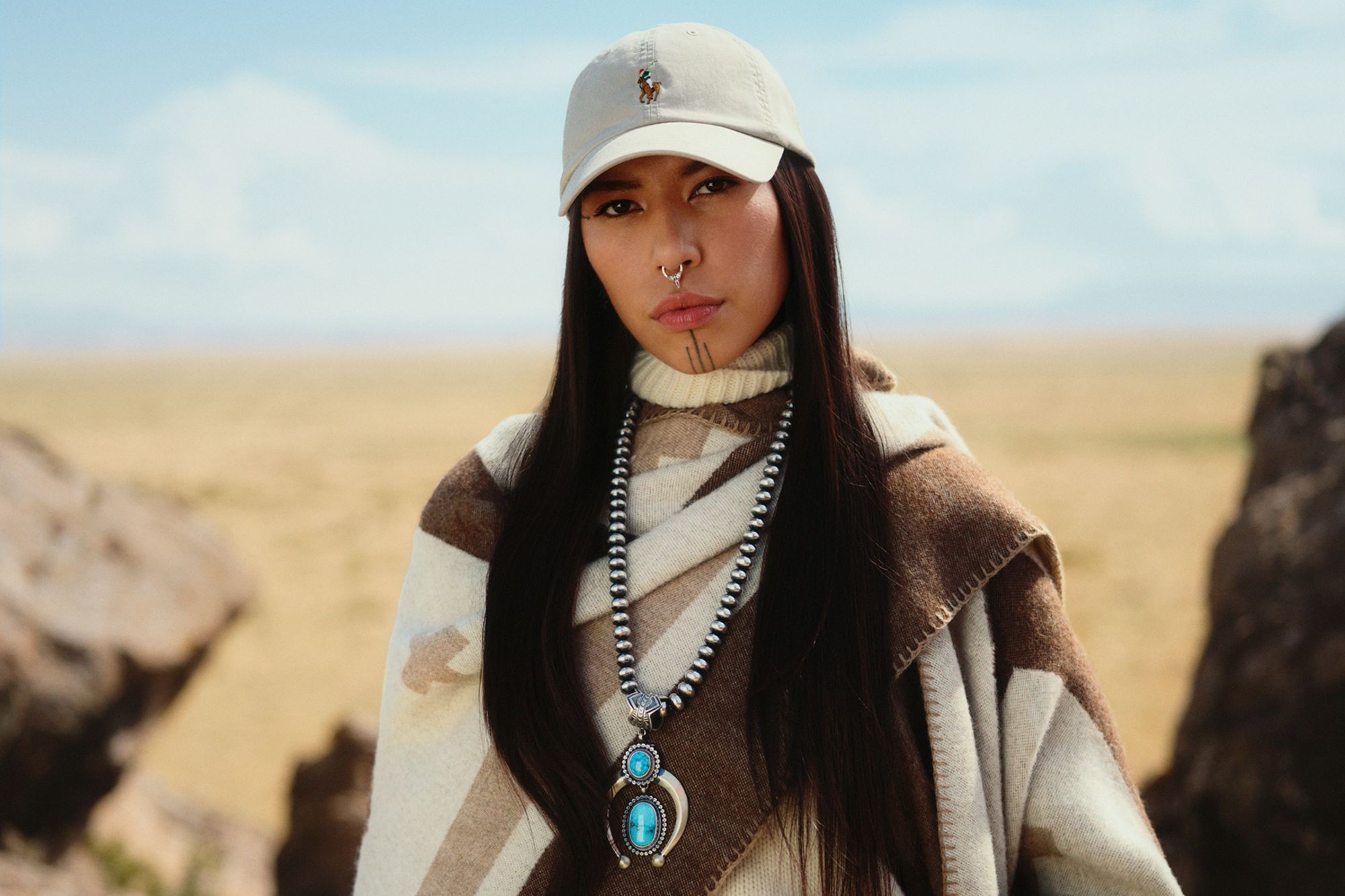
There are moments in culture when a brand doesn’t just get it right—they reveal what the future requires. Ralph Lauren’s newest campaign, Polo Ralph Lauren x TÓPA, inspired by Native American design traditions, is one of those moments. It is striking. Beautiful. Deeply considered. And—importantly—reflective of an evolving understanding of what “Americana” actually means.
What feels powerful here is not just the visual elegance. It’s the reflection. The recognition that the American story is made of many peoples, many histories, many aesthetics—some celebratory, some painful, all undeniably formative. Ralph Lauren has long mastered the blonde-and-blue-eyed cowboy mythology and the clean, waspy New England romance. But what we’re witnessing now is a widening of the frame—a willingness to expand the archive of who gets to be seen as central to the American imagination.
This builds on the quiet brilliance of the Oak Bluffs campaign—one of the most thoughtful, aesthetically intelligent portrayals of Black elite life we’ve seen from a global fashion house. It didn’t posture. It didn’t sensationalize. It simply honored a real place, a real culture, a real history that has always existed, even if it has rarely been centered in mainstream narratives.
Now, with Polo Ralph Lauren x TÓPA, the brand extends that same care. Not exploitation. Not flattening. Instead, a recognition of complexity—how histories can be contested and complicated, but still deserving of reverence. The designs feel connected, not extracted. The tone feels aligned to the brand’s aesthetic values while honoring the communities whose traditions shape the work.
And the timing of its release—during the week of Thanksgiving—is not accidental. It offers a counter-narrative to a holiday often wrapped in sanitized mythology. It redirects attention toward the people who have shaped this land long before it was called America. It makes space for beauty without erasing the truths beneath it. That is cultural intelligence in practice.
What Ralph Lauren is doing right now is redefining Americana without abandoning its core. It is expanding the canon while holding steady to the brand’s essence: timelessness, craftsmanship, depth, and aesthetic clarity. Polo Ralph Lauren x TÓPA shows us the future of American storytelling—one that is broad enough, nuanced enough, and brave enough to hold multitudes as grand and as great as the individuals, communities and societies of which we all are a part.
What Cultural Organizations and Brands Can Learn from These Moments
1. Expand the Archive, Don’t Replace It
Authentic storytelling isn’t about abandoning tradition—it’s about widening the lens. Institutions can honor their history while intentionally bringing forward the communities and narratives long held at the margins.
2. Aesthetic Intelligence Matters
It’s not just what you represent, but how. Careful design, intentional imagery, and thoughtful creative direction can convey respect, depth, and connection. Learn more about this term from one of my favorites, Pauline Brown and her book, Aesthetic Intelligence.
3. Release With Cultural Timing
The timing of a message shapes how it lands. Aligning campaigns with cultural moments—holidays, seasons, historical anniversaries—can deepen impact and signal awareness.
4. Micro-Target Without Flattening
As seen in Oak Bluffs and now in Polo Ralph Lauren x TÓPA, organizations can create work for specific communities without tokenizing. Speak to people, not about them.
5. Honor Complexity, Not Simplicity
Stories don’t have to be neat. They need to be honest. Institutions that acknowledge historical nuance build more trust and credibility.
6. Root in Authentic Partnership
Engaging communities requires ongoing relationships—not one-off gestures. Collaborate with culture bearers, creators, designers, and historians to ensure depth, alignment, and integrity.
For ongoing cultural intelligence and applied frameworks for leaders shaping culture, subscribe to Ayofemi’s Substack.